
For earnings and deductions that need to be applied to a paycheck but sent to a third-party, Empeon provides a Third-Party Agency Service that will transmit these funds to their designated recipients. Though this feature is most commonly used for deductions, such as garnishments or benefits contributions, it can also be applied to earnings if necessary.
Once a third-party agency is set up in the system and linked to an Earning or Deduction, Empeon automatically handles the transfer of funds during payroll processing. This eliminates the need for employers to have manually manage these transactions, while also ensuring payments are processed accurately and on time to the appropriate parties.
Agency Set Up
Before Empeon can manage payments to an Agency for a deduction or earning, the Agency's information must first be registered within Empeon Workforce. This involves registering the Agency's contact details, specifying the payment method and setting up the payment frequencies.
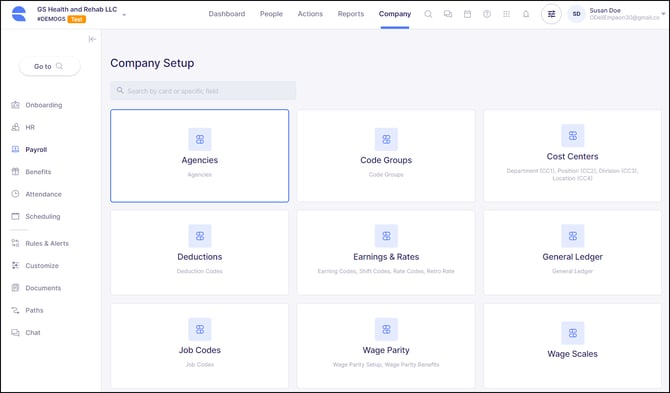
To set up an Agency, navigate to the Payroll section within the Company tab, and select the Agencies Card.
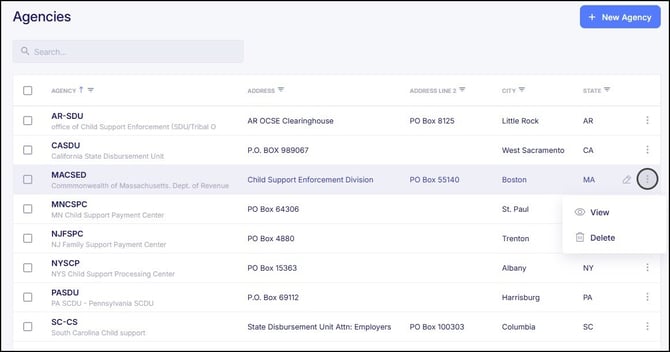
Within the Agencies Card, it will show all Agencies that have already been set up within the system. For Agencies that have been registered already, there will be options to View, Edit and Delete if needed.
To add a new Agency, click the blue button labeled "+ New Agency" .
Agency General Settings
When setting up a new Agency, a window will appear, prompting entry of the following fields to configure the Agency's General Settings:
- Code - Enter a code for this Agency. This code will be the system's coding/reports record for all payments sent to the agency. The code can't be more than 10 characters and shouldn't include any special characters.
- Name - Enter the name of the Agency. The text that is entered in this field is what will be on the payee line of the check that is sent to the Agency. Therefore, make sure that the name identified in this field is the exact entity that the Agency wants the check to be made out to.
- Address, City, State, Zip Code - Physical check payments will be sent to the address identified in these fields. Therefore, be sure to key in the exact address that the Agency requires that the payment be sent.
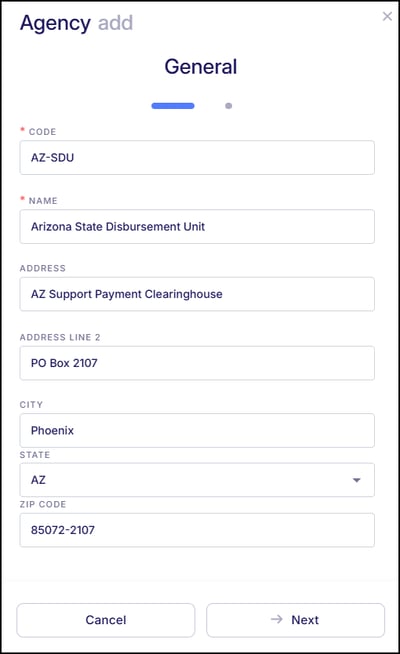
After entering this information, click "Next" to configure how payment will be transmitted to this Agency.
Agency Payment Settings
On this next screen, the following fields of information will be prompted:
- Payment Method - This will establish how the Agency will be paid. There are three options to choose from:
- Check - This means the payment to the Agency will be handled by check. Payments sent by physical check are mailed via first class US Postal Service.
- ACH - This means the payment to the Agency will be handled via ACH. This option should be used sparingly since payment information is not provided with regular ACH.
- ACH-Child Support - This should always be selected for Agencies being set up for child support being paid via ACH.
If choosing either ACH payment options, be sure to enter the correct Routing Number for the Agency. The Agency's Account Number can also be entered here, which is typically used for child support, however there is a setting for "Set individual employee account number" to instead have the Account Number set individually on the Employee Profile. This toggle is typically used for HSA accounts. Be sure to then establish the Account Type.
For Child Support ACH payments, an additional field for FIPS Code will be listed.
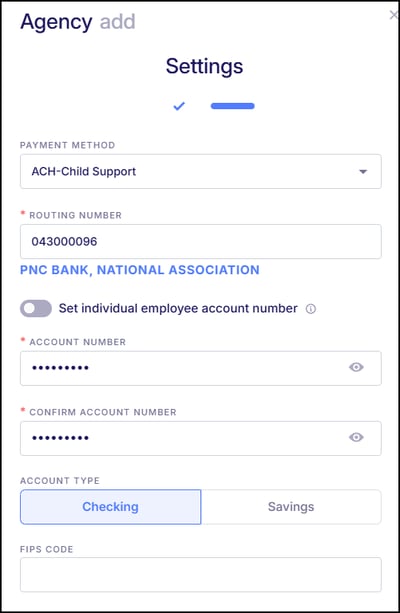
ALL Agencies set up for Child Support payments via ACH MUST be configured as ACH–Child Support.
Regardless of the Payment Method selected in the first section of this screen, the remaining settings are used to finalize the Agency’s payment configuration.
- Payment Frequency - Set the frequency at which payments will be sent to the agency. This does not need to match the frequency of the deduction. For example, Union Dues may be deducted with every payroll, but the payment to the Union can be set to occur monthly, consolidating all deductions taken during the month. It’s important to note that Empeon will still debit the employer’s payroll account for agency-related deductions with each payroll, even if the agency payment is set to a different frequency.
- Important Note: When changing payment frequencies for existing Agencies, please contact Empeon Customer Support for guidance.
- Suppress SSN - The Agency payment stub will list each employee and their payments. By default, to help the Agency identify each individual included with the agency check, the SSN is listed alongside the employee’s name. Click this option to not have the SSN displayed, if desired.
- Last Paid - When an Agency is first set up this will automatically default to "Never". However, once the agency is applied to their first payment and on, this field will be populated with the date that a payment was last sent.
- Important Note: Though this field can be manually overridden, Empeon strongly recommends not to do so in order to avoid payment errors. For any questions about the last payment date shown in this field, contact Empeon Customer Service.
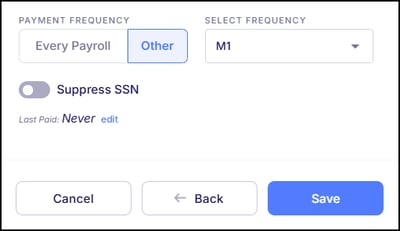
Once all fields on this screen have been attended to, click "Save". The Agency is now set up within the system and available to be linked to earnings or deductions.
For Agencies that have been registered, in almost all cases they are applied to recurring earnings and deductions rather than the actual Earning or Deduction Code itself set up on the company-level. For instructions on how to link an Agency to a deduction for individual employees, please review Empeon's article Employee Deduction Setup.